
Dental sealants
Dental sealants for kids, with no drilling.
No drilling, no numbing, no needle. A sealant is painted into the grooves of a back molar and hardened with a light, a few minutes per tooth, and your child can eat right after. Dr. Naila Farooq has done only pediatric dentistry since 1999.
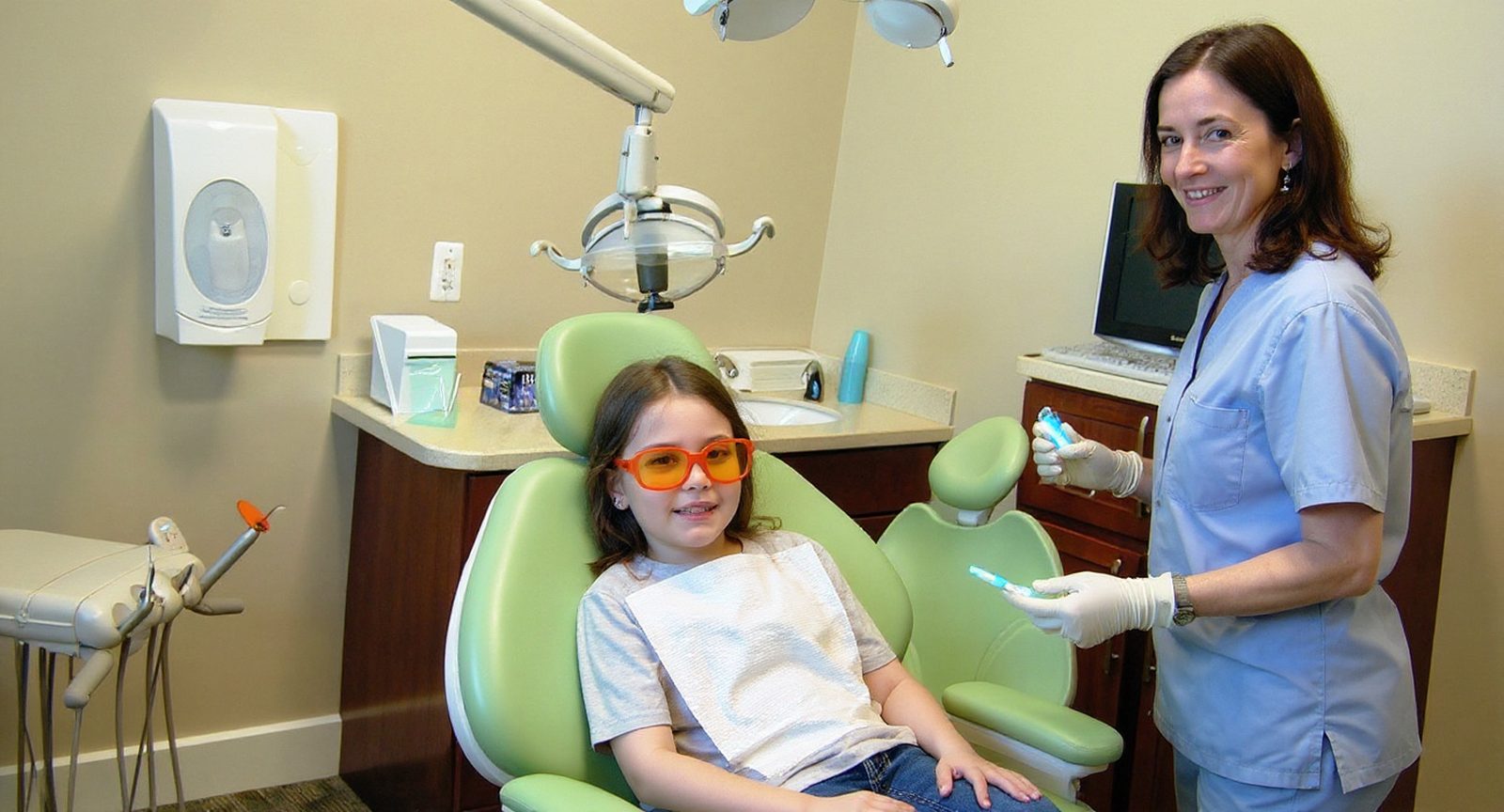
Why molars get cavities anyway
Look at the chewing surface of a back molar and you see pits and grooves, some narrower than a single toothbrush bristle. Food and bacteria settle in, and careful brushing does not get all of it out. That is why most childhood cavities start on the chewing surfaces of the back teeth.
A sealant is a thin coating painted into those grooves. It flows into the crevices, hardens, and turns an uneven surface into a smooth one a toothbrush can clean. The tooth underneath is left completely intact. The sealants we use are BPA-free.
Sealants wear and can chip, so we check them at every six-month visit. They cover only the chewing surface; the spaces between teeth still depend on flossing.
How it goes
A sealant, in the order it happens.
Four steps, a few minutes per tooth. It is often a good first procedure for a child who is nervous about dental work, because they sit through something in the chair and nothing bad happens.
- 01
Clean and dry
We clean the chewing surface and dry it. The sealant needs a clean, dry tooth to bond, so this step is not rushed.
- 02
Condition
We condition the surface so the sealant will bond to the enamel. Nothing is drilled and nothing is numbed.
- 03
Paint
The material is painted into the grooves and flows into the crevices. The tooth underneath stays intact.
- 04
Cure
A curing light hardens the sealant. Your child can eat as soon as they leave. We check it at every six-month visit and reapply when it shows wear.
Questions parents ask
Sealants, explained.
What parents ask before we seal a molar.
When should my child get sealants?
As soon as the permanent molars come in, usually around age six for the first set and around age twelve for the second. Sealing a molar before bacteria settle into the grooves is far more effective than sealing early decay. We may also suggest sealants on baby molars if the grooves are deep or your child has had cavities.
Does getting a sealant hurt?
No. There is no drilling, no numbing, and no needle. We clean the tooth, paint the sealant into the grooves, and harden it with a light. Most children barely notice it happening.
How long do sealants last?
Several years, though they wear with chewing and can chip. We inspect them at every check-up and reapply when they show wear, because a gap in the coating can trap bacteria.
Do they still need to floss?
Yes. A sealant covers the chewing surface and nothing else. The sides, where teeth touch, are the other place cavities form. Sealants and flossing protect different surfaces.
Are sealants safe for children?
Yes. The sealants we use are BPA-free, the amount of material is tiny, it bonds to the tooth, and sealants have been used routinely in pediatric dentistry for decades. Sealing a cavity-prone molar is safer than leaving it to decay.
What parents say about keeping cavities away.
Google review“My kids love this dentist. They are actually excited when they get their teeth cleaned. They haven’t had cavities in at least the last 3 check-ups because the dentist helped us get the prescription toothpaste, and it works miracles.”
Google review“Dr. Farooq and her team are simply amazing. My son gives them a 10 out of 10. He had several questions about his cavity filling, and all questions were answered and time was given to ensure he was comfortable.”
Google review“They are truly kid people. I have really enjoyed knowing I am getting an honest diagnosis and treatment plan for their teeth. Everything is explained and done at the child’s pace.”
Related preventive care
Book a visit
Ready to schedule your child’s visit?
Call us during office hours or send a request online any time. Our team will reach out to book a time that works for your family.
New patients are always welcome.
Front desk, Monday to Thursday, 8:30 AM to 5:30 PM
After-hours dental emergency? Call 248-345-6775.
Have an emergency?
If your child is struggling to breathe or swallow, or has a head injury, call 911 first. For a dental emergency that is not life-threatening, such as a knocked-out tooth, a broken tooth, dental swelling, or pain that will not settle, call our emergency line, day or night. We would rather tell you it can wait than have you sit on it over a weekend.